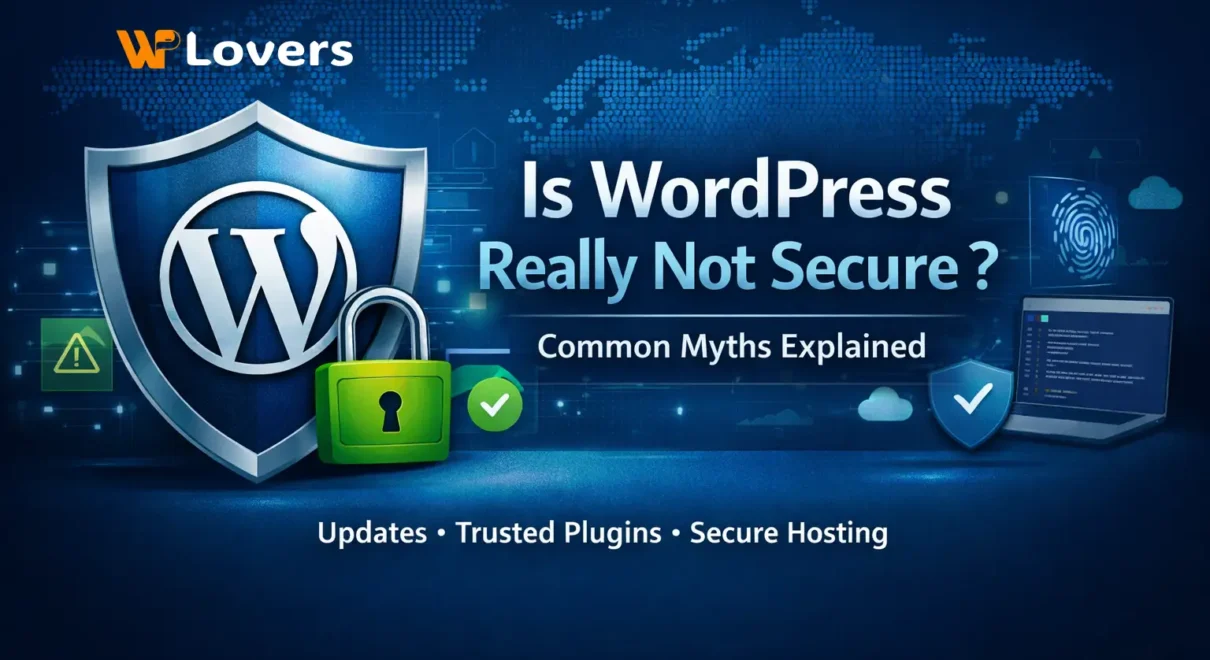
Is WordPress Really Not Secure? A Common Myth Among New Clients & Developers
One of the most common statements I hear from new clients and even beginner developers is:
“WordPress is not secure. It gets hacked very easily.”
This belief has been repeated so often that many people now accept it as truth — but it’s a myth.
The reality is simple:
👉 WordPress itself is not insecure. Poor maintenance is.
WordPress powers more than 40% of all websites on the internet, including enterprise businesses, media companies, government portals, and high-traffic platforms. If WordPress were inherently unsafe, it would not be trusted at this scale.
🔐 Why Do WordPress Websites Get Hacked?
Most hacked WordPress websites share one or more of the following issues:
1️⃣ Outdated WordPress Core, Plugins, or Themes
This is the number one reason for security breaches.
When:
- WordPress core is outdated
- Plugins or themes are not updated
- Old or abandoned plugins are still active
…your site becomes vulnerable.
🔑 Updates are not optional — they are security patches.
A fully updated WordPress website is extremely difficult to compromise.
2️⃣ Installing Plugins & Themes Without Proper Review
Another major mistake made by new developers and site owners is installing plugins or themes without checking:
- Last updated date
- Number of active installations
- User reviews and ratings
- Developer reputation
Using poorly coded or nulled plugins/themes is like inviting hackers into your website.
👉 Always use trusted plugins from reputable developers and remove anything you don’t need.
3️⃣ Weak Login & Security Practices
Common mistakes include:
- Weak passwords
- Using “admin” as the username
- No two-factor authentication
- No firewall or security plugin
These are basic security fundamentals, not WordPress limitations.
🛠️ Regular Maintenance = Strong Security
A secure WordPress website requires ongoing care, not a one-time setup.
Best practices include:
- Regular WordPress, plugin, and theme updates
- Removing unused plugins and themes
- Regular website backups
- Security monitoring and malware scanning
- Strong user access control
When these steps are followed consistently, the risk of hacking becomes extremely low.
🌐 Hosting & Server Security: The Hidden Risk
Many people focus only on WordPress but ignore hosting — which is a huge mistake.
❌ Cheap shared hosting often places thousands of websites on a single server.
If one site gets infected, it can affect many others on the same server.
Even a well-secured WordPress site can be compromised due to:
- Poor server isolation
- Weak hosting-level security
- Infected neighboring websites
✅ The Right Hosting Makes a Big Difference
For business-critical websites, always prefer:
- Managed WordPress hosting
- VPS or cloud hosting
- Hosts that offer firewalls, malware scanning, and daily backups
A secure website is not just WordPress — it’s WordPress + hosting + maintenance.
🚀 Final Verdict
❌ WordPress is not insecure.
❌ WordPress is not “easy to hack.”
✅ Neglected websites are easy to hack.
If your WordPress site is:
- Up to date
- Using trusted plugins and themes
- Properly secured
- Hosted on a reliable server
Then it is safe, stable, and highly secure.
📌 Final Thought
Stop blaming WordPress for security issues.
Start maintaining it the right way.
If you treat WordPress like a professional platform, it will perform like one.